The 5 Credit Score Tiers and What They Mean for You Credit scores run from 300 to 850. That much most people know. But what those numbers actually get you — the interest rates, the approvals, the real-world impact — that is where things get interesting. Let us break it down into five clear tiers so you can see exactly where you stand and what is within reach. Tier 1: Excellent (800 to 850) About 21 percent of Americans sit in this range. At this level, you are getting the best rates on everything. Lenders compete for your business. You…
The Money Problem Nobody Talks About Here's something most personal finance blogs won't tell you: the gap between where you are financially and where you want to be isn't really about strategy. It's not about finding the right stock pick, stumbling onto a hot real estate deal, or launching the perfect online business. Those things matter, sure. But underneath all of them sits something far more fundamental — the way you think about money, risk, effort, and yourself. Every multimillionaire I've studied or spoken with shares a common thread, and it has nothing to do with where they started. Some…
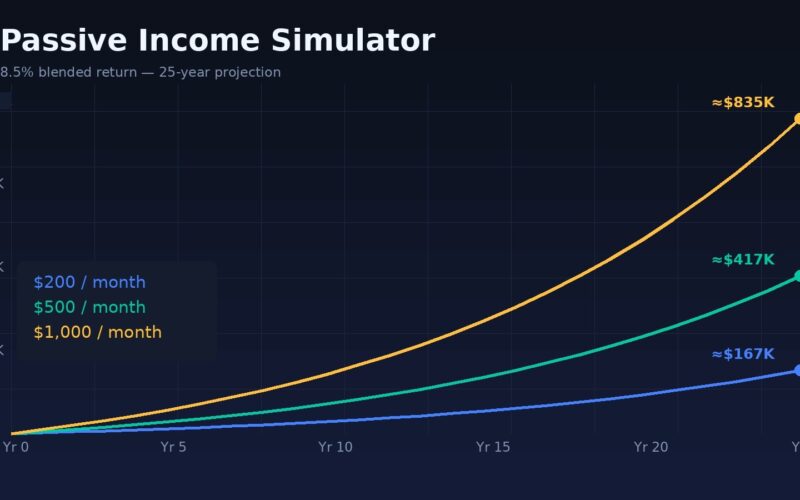
Why Passive Income Matters (Even If You Are Broke) Look, not everyone has ten grand sitting around to dump into a rental property or a franchise. That does not mean you are locked out of building passive income streams. There are real, legitimate ways to start earning money while you sleep — and most of them cost less than a monthly grocery run. The trick is knowing which ones are worth your time and which ones are just internet hype. I have tested and researched dozens of passive income ideas, and these six stand out for people who want to…
The Real Difference Between Index Funds and ETFs If you have been shopping around for a simple way to invest your money, you have probably bumped into two terms everywhere: index funds and ETFs. They sound similar, they kind of do the same thing, and honestly, a lot of financial websites explain them in the most confusing way possible. Let me fix that. Both index funds and ETFs are ways to own a basket of stocks (or bonds) without having to pick individual winners. Instead of buying one company and hoping for the best, you buy a slice of hundreds…
A wage slave is anyone — regardless of race, religion, ethnicity, gender, sexual orientation, or political party — who faces a blunt choice: accept a job or go hungry. It's anyone who doesn't have the resources to take care of themselves and their family without selling off the most productive hours of their day, their week, their life to somebody else in exchange for a paycheck. So how do you know if that's you? Do you thank God when Friday rolls around? Would you quit tomorrow if the money stopped? Do you feel like someone else has purchased a large…
The Salary Negotiation Problem Nobody Talks About Here's a number that should bother you: the average person who doesn't negotiate their salary leaves roughly $7,500 per year on the table. Over a 40-year career, that's $300,000 in lost earnings — and that's before you factor in compound raises, bonuses, and retirement contributions that are calculated as percentages of your base pay. And yet, something like 56% of workers never negotiate at all. They just accept whatever number gets thrown at them because asking for more money feels awkward, or they don't know what to say, or they're afraid the offer…
What Are Prepaid Debit Card Loans? If your credit score has taken a beating and you don't have a traditional bank account, you've probably run into a wall when trying to borrow money. That's where the idea of getting a loan wired straight to a prepaid debit card starts sounding pretty appealing. These are essentially short-term loans—often payday loans or cash advances—where the approved funds get loaded onto a prepaid card instead of being deposited into a checking account. The concept is straightforward enough. You apply, the lender approves you (sometimes within minutes), and the money lands on your prepaid…
What Actually Changed With Student Loans in 2026 If you have been keeping one eye on the news and the other on your loan balance, you are not alone. A lot has shifted since the start of 2026, and honestly, keeping track of it all feels like a part-time job. Let me break down the biggest changes so you do not have to dig through government press releases at midnight. The Department of Education rolled out a new round of adjustments to income-driven repayment plans in early 2026. These changes affect how your monthly payment is calculated, how interest capitalizes,…
Why You Even Need a Budgeting App Let me start with something most finance blogs won't tell you: you don't actually need a budgeting app to manage your money. People did fine for decades with envelopes and spreadsheets. But if you've ever gotten to the 25th of the month and genuinely couldn't figure out where your paycheck went, a budgeting app can be the difference between staying afloat and drowning in debt. I've spent the last two years testing basically every budgeting app that matters. I've paid the subscriptions, connected my bank accounts, categorized thousands of transactions, and formed real…
Why Dropshipping Still Works in 2026 (Even With Almost No Money) If you've spent any time looking into online business ideas, you've probably come across dropshipping more times than you can count. And honestly, for good reason — it's one of the few e-commerce models where you can realistically get started without tying up thousands of dollars in inventory. The basic idea hasn't changed: you set up an online store, list products for sale, and when a customer places an order, your supplier ships the item directly to them. You never touch the product. You never pay for stock upfront.…