
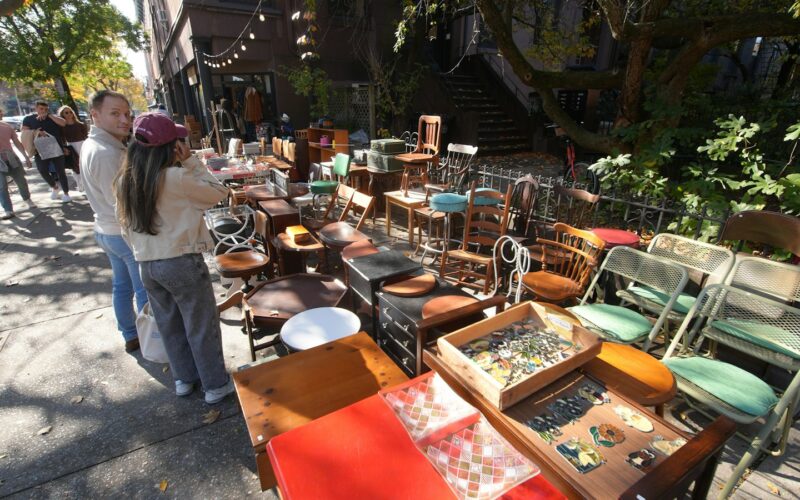
You found a dresser listed at $40 that “sells for $200 online.” Buy it, flip it, pocket $160, right? Wrong. After pickup time, selling fees, shipping, and the two price drops it takes to actually move, that dresser might pay you $9 an hour. A flipping profit calculator tells you this before your money leaves your wallet.
Quick answer: Real flip profit = (sell price − buy price − fees − supplies − travel cost) ÷ total hours worked. On a $200 flip with $40 buy-in, typical Facebook Marketplace fees and $15 in gas and supplies eat $75–$90, leaving roughly $70–$85 profit — $23/hour if it takes 3 hours. Anything under $15/hour is a hobby, not a side hustle.
The Flipping Profit Calculator Formula (Copy This)
Most people calculate profit as *sell price minus buy price*. That number lies to you. Here’s the full flipping profit calculator formula:
Net profit = Sale price − Buy price − Platform fees − Shipping − Supplies − Travel cost
Then divide by your real hours: research, driving, cleaning, photographing, listing, answering messages, and meeting the buyer.
A worked example. You flip a mid-century chair:
| Line item | Amount |
|---|---|
| Buy price | $60 |
| Truck rental + gas | $25 |
| Cleaning supplies | $10 |
| Facebook Marketplace fee (5% on $220) | $11 |
| Sale price | $220 |
| Net profit | $114 |
| Hours (pickup, clean, photo, list, meet buyer) | 4 |
| Real hourly rate | $28.50 |
That’s a good flip. Change the sale price to $150 and the math collapses to $44 profit — $11 an hour. You’d earn more delivering food.
Why $20 “Profit” Often Means You Lost Money
Fees are where beginner flippers get hurt. Here’s what platforms actually charge in 2026:
- eBay: ~13.25% final value fee plus $0.30 per order
- Poshmark: 20% flat on every sale (a flat $2.95 on items under $15)
- Facebook Marketplace: about 5% on shipped orders, free for local pickup
- Mercari: 10% selling fee plus 2.9% + $0.50 payment processing
- Etsy: 6.5% transaction fee plus 3% + $0.25 processing (relevant if you flip crafts-adjacent items)
Sell a $100 item on Poshmark and $20 disappears before you see a dime. Now add the $4 box, the $8 in packing material if you ship, and the 45 minutes spent photographing.
There’s also the deadstock problem: items that never sell still cost you. A $30 thrift-store lamp that sits in your garage for 6 months ties up capital and garage space. Serious resellers track “sell-through rate” — if an item hasn’t moved in 60 days at your price, the market is telling you something.
Common Flip Margins by Category (Real Numbers)
The 3x rule dominates reseller forums: buy at one-third of what you expect to sell for. Here’s what realistic margins look like by category:
| Category | Typical buy | Typical sell | Gross margin | Notes |
|---|---|---|---|---|
| Furniture | $40–$80 | $150–$300 | 60–70% | Heavy labor, truck needed |
| Sneakers | $60–$100 | $120–$220 | 40–50% | Fakes risk, use StockX |
| Sports cards | Varies | Varies | Unpredictable | Grade before pricing |
| Electronics | $50–$150 | $90–$250 | 35–45% | Test everything, returns risk |
| Vintage clothing | $5–$15 | $30–$60 | 70–80% | Sourcing takes the most time |
| Books/media | $1–$3 | $10–$20 | 80%+ | Low $ per item, volume game |
That 80% margin on clothing sounds great until you realize you spent 5 hours at the bins to source 20 items that sell over 6 weeks. This is why the calculator divides by *hours*, not per item — a high margin on a slow item can still lose to a mediocre margin on a fast one.
A Real 30-Day Flip Log (What the Numbers Show)
Here’s a realistic month for a part-time flipper working Saturdays, run through the calculator:
| Item | Bought | Sold | Fees+costs | Profit | Hours | $/hour |
|---|---|---|---|---|---|---|
| Mid-century chair | $60 | $220 | $46 | $114 | 4 | $28.50 |
| Lot of 12 vintage tees | $36 | $148 | $31 | $81 | 5 | $16.20 |
| Xbox bundle (tested) | $95 | $185 | $29 | $61 | 3 | $20.33 |
| Dresser (heavy) | $45 | $160 | $52 | $63 | 6 | $10.50 |
| Pair of Jordans (verified) | $130 | $235 | $38 | $67 | 2.5 | $26.80 |
| 8 paperback books | $9 | $64 | $12 | $43 | 3.5 | $12.29 |
| Floor lamp (never sold) | $30 | $0 | $0 | −$30 | 2 | −$15 |
Total month: $399 profit across 26 hours — $15.35/hour, and the dead lamp drags it down. Cut the dresser (low $/hour, killed your back) and the lamp (sat 90 days), and the same hours would have paid over $21. That’s the entire discipline in one table: the calculator doesn’t just measure profit, it tells you what to stop buying.
Notice the sneakers line: lowest hours-per-dollar-sourced of anything on the list because verified shoes sell fast and ship easy. Notice the dresser: highest sale price on the list, worst hourly rate. Gross revenue is vanity; hourly rate is the scoreboard.
Where the Deals Actually Are (Sourcing Math Included)
Sourcing is a cost, so treat it like one. Rate your sources by profit-per-sourcing-hour, not by anecdote:
- Garage/estate sales: Best margins early (7–9 AM) when sellers are motivated. Estate sales on the last day often go 50% off everything — great for furniture and tools.
- Thrift stores: Convenient but picked over in most cities. The play is category expertise: scan only your two proven categories and walk past everything else. A flipper who checks only sneakers and tees does a full store pass in 12 minutes.
- Facebook Marketplace “free” section: Zero buy cost, real time cost. Free furniture flips work if you already own a truck and the item needs cleaning, not repair.
- Auctions and storage units: Highest variance. Beginners lose money here because the pros with laser scanners and full truckloads eat the margins. Skip until you have 50 tracked flips.
The rule that falls out of the math: if it takes you more than one hour of sourcing to find a $40-profit item, your ceiling is $40/hour — and most sourcing runs slower than that. Regular routes beat treasure hunts.
How to Build Your Own Flipping Profit Calculator in 10 Minutes
You don’t need paid software. Open Google Sheets and build columns:
1. Item name and category
2. Buy price + date
3. All costs: travel, supplies, repairs (one column, be honest)
4. Platform fee % — enter the number from the list above
5. Sale price (what it actually sold for, not your dream price)
6. Profit = sale − buy − costs − (sale × fee%)
7. Hours spent on this item
8. $ per hour = profit ÷ hours
Add conditional formatting: green above $25/hour, yellow $15–$25, red below $15. Within a month, the colors tell you exactly which categories deserve your Saturday mornings.
Two upgrades worth making:
- Track sold listings, not active listings. eBay’s “sold items” filter shows what buyers actually paid. Active listings show what sellers are dreaming.
- Log unsold items too. Your sourcing cost per item goes up if you buy 10 things and 3 never sell.
What Changes When You Run the Numbers for a Month
Flippers who track hourly rate for 30 days report the same pattern: about 20% of categories produce 80% of the profit. The vintage t-shirt guy discovers his real rate is $31/hour while electronics sits at $9/hour once returns and testing time are counted. He stops buying electronics.
The second discovery: sourcing time is the hidden killer. Two hours at the thrift store to find one $25-profit item is $12.50/hour before any other costs. Building a repeat sourcing route — same stores, same day each week — cuts this dramatically.
If you want to compare flipping against your other side income with the same honest math, run your numbers through our side hustle real hourly rate calculator. For specific categories, the sports card profit calculator handles graded card math, and the Etsy fee profit calculator breaks down that platform’s fee stack line by line. If you’re scaling past hobby volume, pair this with a side hustle income tracker so tax season doesn’t surprise you — flipping income is taxable from dollar one.
Actionable Takeaways
- Always compute profit after fees and hours, not buy-versus-sell
- Follow the 3x rule at purchase: never pay more than a third of the proven sold price
- Redo the math whenever a platform changes fees — eBay and Mercari both adjusted rates recently
- Kill any category under $15/hour after a month of real data
- Track sold (not active) listings when pricing
- Set a 60-day rule: items sitting longer get discounted or donated
FAQ
How much profit should a flip make?
Aim for a minimum $50 net profit per item or $20+ per hour, whichever you care about more. Beginners often accept $15 profits and discover their hourly rate is under minimum wage once fees and drive time are counted.
Is flipping still profitable in 2026?
Yes, but the easy arbitrage is gone. Thrift stores price-check eBay now. Profit comes from cleaning, repair, bundling, and better photos — value you add, not just price differences you spot.
What’s the biggest hidden cost in flipping?
Your time researching and sourcing, then platform fees. A $30 gross-profit flip can net under $10 after a 13% eBay fee, gas, and packing materials.
What sells fastest for beginners?
Small electronics in working order, brand-name sneakers, and vintage clothing. They photograph well, ship cheap, and have deep buyer pools. Avoid large furniture until you’ve confirmed you have the vehicle, the space, and the back for it.
How do I price a flip?
Check sold listings on eBay (filter: sold items), not asking prices. Price at or slightly below the median sold price for the same condition if you want a fast sale; price 10–15% above it only if your item is exceptionally clean or complete.
Do I pay taxes on flipping income?
Yes, from the first dollar of net profit. You’re self-employed for this income, which means self-employment tax (15.3%) plus income tax on profits. Keep every receipt — mileage, supplies, and even a portion of your phone bill are deductible.