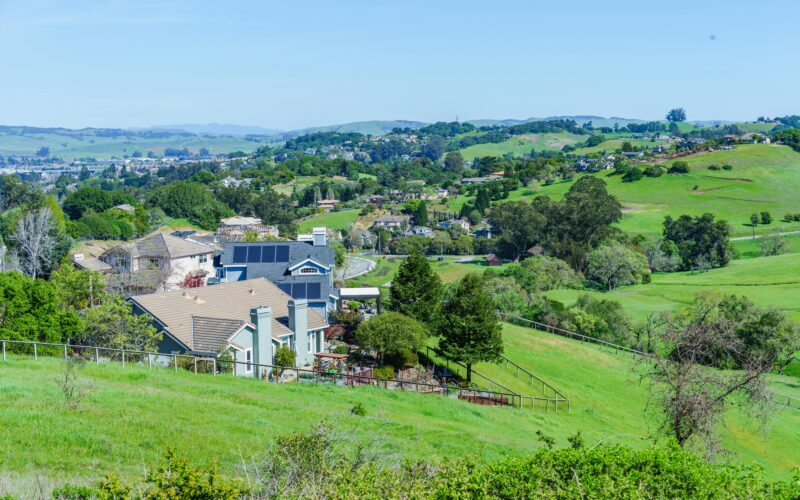
If you’ve been watching the real estate market over the past year, you already know it’s been a strange ride. Mortgage rates that climbed above 7.5% in late 2023 finally started coming down in the second half of 2025, settling somewhere around 6.2% to 6.5% by spring 2026. That’s still not cheap by pre-pandemic standards, but it’s been enough to thaw a market that was practically frozen for two years.
Home sales, which bottomed out at their lowest levels since the mid-1990s, have picked up. Not dramatically — we’re not returning to the frenzy of 2025 — but enough that agents in most metro areas are actually busy again. The National Association of Realtors reported existing home sales running at an annualized pace of roughly 4.3 million in early 2026, up from the 4.09 million trough we saw in 2024.
Here’s what’s genuinely different this time around, though: inventory is finally improving. After years of homeowners refusing to sell because they didn’t want to give up their 3% mortgage, a combination of life events, job relocations, and the simple passage of time has pushed more listings onto the market. Active inventory in February 2026 was up about 22% year over year, according to Realtor.com data. That’s still below what we’d consider a balanced market, but it’s moving in the right direction.
Prices: The Slow Grind Higher
Nationally, median home prices continued their upward march, though the pace has slowed considerably. The S&P CoreLogic Case-Shiller National Home Price Index rose roughly 3.8% over the twelve months ending March 2026. That’s a far cry from the 18-20% annual gains we saw in 2025, and honestly, that’s healthy. Markets that were overheated — places like Austin, Phoenix, and Boise — have largely corrected and are now growing at more sustainable rates, or in some cases still flat.
The markets that performed best over the past year? Mostly affordable and mid-cost cities in the Midwest and Southeast. Markets like Indianapolis, Columbus, Raleigh-Durham, and Nashville saw price gains in the 5-7% range. These are places where median home prices still sit between $300,000 and $450,000, which means a buyer with a decent down payment can actually make the math work on a monthly payment without stretching to the breaking point.
At the other end, the luxury markets in Manhattan, San Francisco, and parts of Los Angeles have been more mixed. Manhattan condo prices have recovered nicely from their post-pandemic dip and are now running above 2019 levels by a meaningful margin. San Francisco remains a question mark — tech layoffs and remote work have structurally changed the demand equation there, and prices are still 10-15% below their 2022 peaks with no clear catalyst for a sharp recovery.
Interest Rates and What the Fed Is Actual
Real Estate Outlook May 2025
” alt=”Real Estate Outlook May 2025″ loading=”lazy”/>Real Estate Outlook May 2025
g” alt=”Real Estate Outlook May 2025″ loading=”lazy”/>Real Estate Outlook May 2025
ly Doing
The Federal Reserve cut rates three times in the second half of 2025, bringing the federal funds rate down to a target range of 4.00-4.25% by early 2026. Markets are pricing in one or two more cuts before year-end, but the Fed has been careful to signal that it’s not rushing. Inflation, while significantly cooler than its 2022 highs, has proven stickier than anyone wanted — core CPI is still running around 2.8% annually.
What does this mean for mortgage rates? Probably not a dramatic drop from here. The 30-year fixed rate is likely to bounce between 5.8% and 6.5% for most of 2026, with occasional dips below that range if economic data weakens more than expected. If you’re waiting for 4% mortgages to return, you’ll probably be waiting a very long time. The days of free money are over, and that has real implications for how both homebuyers and investors need to think about their math.
For investors, the higher rate environment means the cap rate compression story that defined 2012-2025 is largely finished. Properties need to generate actual cash flow again. Buying on speculation that someone will pay more next year is a much riskier bet when your cost of capital is 6%+ instead of 3%.
The Rental Market: Still Strong, But Shifting
Rental demand remains solid, driven by the simple fact that a large portion of the population can’t afford to buy at current prices and rates. National apartment occupancy sits around 94.5% as of Q1 2026, which is healthy though slightly below the 96%+ peaks of 2025-2022.
Rent growth has moderated significantly, however. After the eye-popping 10-15% annual increases of 2025 and 2022, most markets are now seeing rent growth in the 2-4% range. The Sun Belt metros that saw the most apartment construction — Austin, Dallas, Denver, Phoenix — are actually experiencing slight rent declines in some submarkets. Too much new supply hitting the market at once will do that.
That said, the affordable and workforce housing segments continue to outperform. Class B and C apartments in mid-market cities remain one of the better risk-adjusted opportunities in commercial real estate right now. Rent growth in the 3-5% range with stable occupancy and cap rates between 5.5% and 7% depending on the market — that’s a profile that makes sense even in this rate environment.
Commercial Real Estate: Still Working Through the Pain
The office market remains the elephant in the room. Office vacancy nationally is hovering around 19-20%, and in some markets — San Francisco, Chicago, Houston — it’s well above that. Return-to-office mandates have helped somewhat, but the structural shift to hybrid and remote work is real and permanent. Buildings that are Class A, recently renovated, and in desirable locations are performing adequately. Everything else is struggling.