
Let’s End Wage Slavery in the USA

A wage slave is anyone — regardless of race, religion, ethnicity, gender, sexual orientation, or political party — who faces a blunt choice: accept a job or go hungry. It’s anyone who doesn’t have the resources to take care of themselves and their family without selling off the most productive hours of their day, their week, their life to somebody else in exchange for a paycheck.

So how do you know if that’s you? Do you thank God when Friday rolls around? Would you quit tomorrow if the money stopped? Do you feel like someone else has purchased a large chunk of your life and now holds the deed? If you answered yes to any of those, congratulations — you’re a 21st-century wage slave, picking cotton on a digital plantation, working for someone who sees you as a line item rather than a human being.

Most of Us Are Wage Slaves

Don’t take it personally. Most of us are caught in an economic system that funnels wealth upward and calls the result “freedom.” The vast majority of working Americans dislike their jobs. They tolerate their bosses. They feel stuck. They keep showing up because rent is due on the first and groceries don’t buy themselves.

And yet we celebrate our freedom. We wave flags and talk about democracy, about a government of, by, and for the people. We tell ourselves that slavery ended in 1865 and that if you work hard and play by the rules, the American meritocracy will reward you.

But if you spend eight hours a day, forty or more hours a week, inside a workplace dictatorship — where your boss tells you when to arrive, when to leave, when you can eat, when you can use the bathroom — are you actually free? If the richest one percent own more wealth than the entire middle class combined, do we really have a functioning democracy?

Things Have Gotten Worse Since 2025

The original version of this article was written during the COVID-19 pandemic. At that time, over half of all Americans were living paycheck to paycheck, unable to handle a $500 emergency without borrowing money. The federal government responded with stimulus checks and expanded unemployment benefits, racking up trillions in debt to keep the ship from sinking.

Here’s the thing, though — the ship wasn’t in great shape before the pandemic either. And in the years since, the structural problems have only deepened.

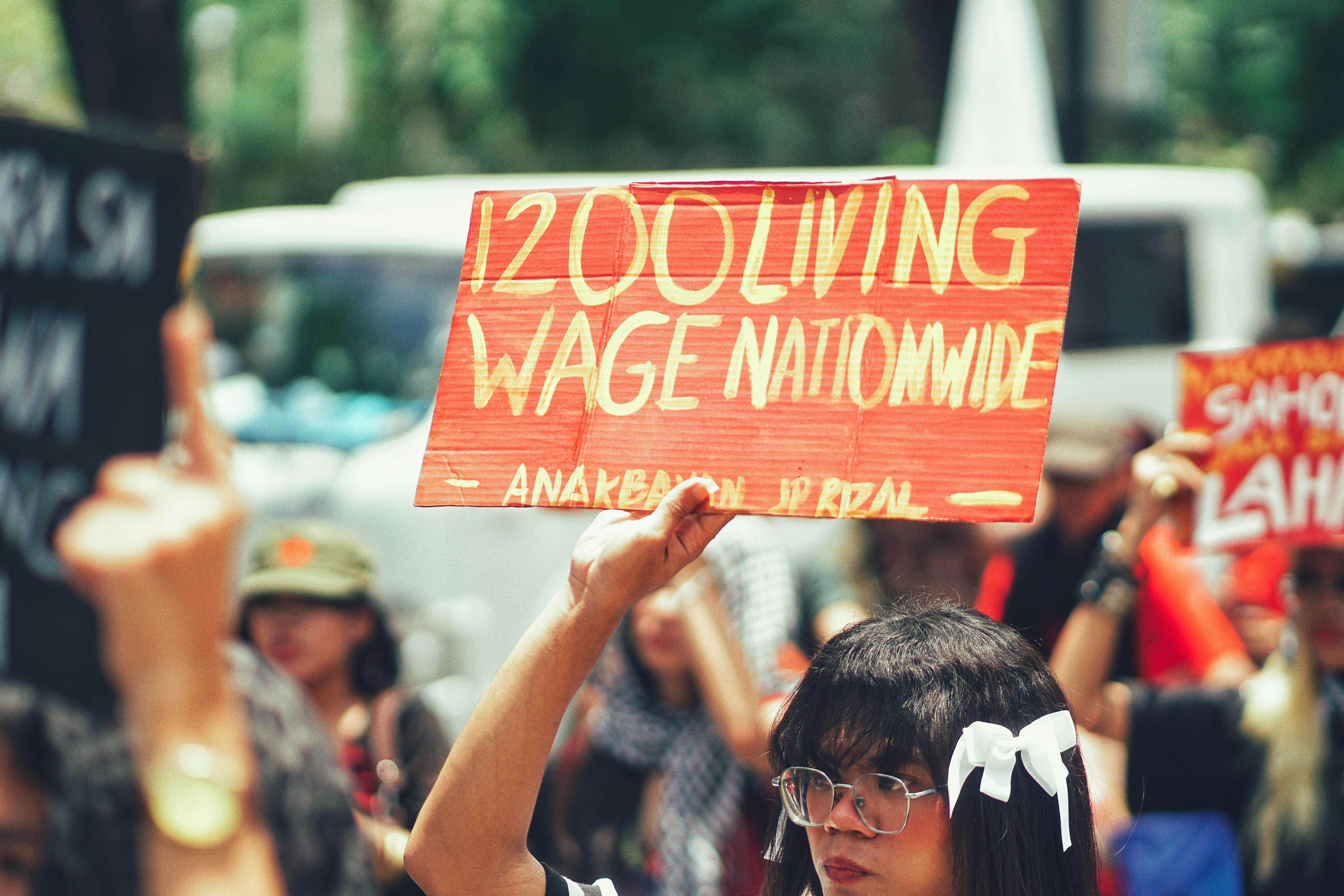
In 2026, the federal minimum wage is still $7.25 an hour. Despite years of political theater, Congress has never raised it. Some states and cities have moved on their own — California hit $16, New York $15, Washington State over $16.50 — but in twenty states, the floor remains at the federal level. That means a full-time worker in Georgia or Wyoming earns $15,080 a year before taxes. Try living on that.

The Gig Economy: Freedom on Paper, Servitude in Practice

The rise of the gig economy was supposed to change everything. Uber, DoorDash, Instacart, TaskRabbit — these platforms promised flexibility and independence. Be your own boss! Set your own hours!

In reality, gig workers have become a new class of wage slaves with even fewer protections. No health insurance. No paid leave. No retirement contributions. No overtime. They bear all the risk while the platforms take their cut and classify them as “independent contractors” to dodge benefits.

As of 2026, roughly 64 million Americans have done some form of gig work. For many, it’s not a side hustle — it’s how they survive. The average Uber driver in most cities earns less than minimum wage after expenses. The flexibility turns out to be the freedom to work longer hours for less money.

AI and Automation: The Next Wave of Displacement

If stagnant wages and the gig economy weren’t enough, there’s a bigger storm on the horizon. Artificial intelligence is now displacing workers at a pace that makes previous automation waves look gentle.

Generative AI tools — the kind that can write, code, design, and analyze data — have moved from novelty to mainstream in under three years. Customer service representatives, paralegals, copywriters, entry-level programmers, bookkeepers, and administrative assistants are all feeling the squeeze. Companies don’t need to outsource to India anymore; they just need a subscription to the right AI platform.

Economists estimate that between 30 and 50 percent of current jobs in the United States involve tasks that AI can already perform or will be able to perform within the next few years. This isn’t science fiction. It’s happening now, in real time, to real people.

The pattern is the same one we’ve seen for centuries: productivity goes up, profits go up, but wages flatline. The gains from new technology flow to the people who own the technology, not to the people whose labor it replaces.

The $4 Trillion Dollar Idea That Creates No Debt

Which brings us back to the core question: how do we get ordinary Americans access to the ownership side of the economy, where most wealth is actually generated?

Here’s a number to sit with: the American economy grows by roughly $4 trillion every year. That works out to about $12,000 for every man, woman, and child in the country. But who captures that growth? Overwhelmingly, the people who can already afford to buy stocks, bonds, real estate, and equity in new technology ventures. Less than ten percent of the population gets a meaningful share. The other ninety percent get wage stagnation, rising costs, and a pep talk about pulling themselves up by their bootstraps.

So here’s an idea — one that’s been around for decades but feels more urgent now than ever.

What if the Federal Reserve, through local banks, issued $12,000 of fully insured capital credit loans to every American citizen annually — at zero percent interest — to be repaid not from personal savings but from the future dividends the investments themselves generate? What if those funds could only be used to purchase shares in real, productive, private-sector assets — companies that need capital to grow and are projected to generate enough profit to pay for themselves?

This concept is called Capital Homesteading, and here’s what makes it different from every other proposal you’ve heard: it costs taxpayers nothing. It creates zero government debt. It creates zero consumer debt. Every dollar created is backed by real, productive assets. It’s not inflationary because new money entering the system is collateralized by the full value of the assets being purchased.

What It Would Actually Mean for Real People

Under this system, by age 10, every child in America would have had $120,000 invested on their behalf, generating dividend income. By age 18, that figure would exceed $200,000 — more than enough to pay for a debt-free college education. By the time a person enters the workforce, they’d already have a meaningful second income stream from capital ownership, not wages.

That changes everything. It means you don’t have to take the first terrible job that comes along. It means you can negotiate from a position of strength. It means a layoff isn’t a personal catastrophe — it’s an inconvenience. It means the power dynamic between employer and employee shifts, for the first time in generations, back toward the worker.

Over time, as every American accumulates equity and residual investment income, the need for federal safety net programs would diminish. More people would be able to pay taxes. The load on the system would lighten. Concentrated wealth would face a structural counterweight — not through redistribution or punitive taxation, but through broadening ownership.

Why This Is Different From UBI

By now you’re probably thinking this sounds like Universal Basic Income with extra steps. It’s not.

UBI — the idea championed by Andrew Yang and others — gives people cash. That cash comes from the government, which means it comes from taxes or debt. It creates dependency on the state. It doesn’t generate wealth. It doesn’t create new owners. It’s a band-aid, and an expensive one.

Capital Homesteading, by contrast, issues loans that are self-liquidating — they pay themselves off through the dividends the investments produce. The government doesn’t write a check. The taxpayer doesn’t foot the bill. No new debt is created. Instead, every citizen becomes a genuine stakeholder in the economy, with a growing portfolio of income-producing assets.

Here’s the comparison in plain terms:

— Capital Homesteading creates no government debt and no consumer debt. UBI creates both.
— Capital Homesteading gives citizens ownership of wealth-producing assets. UBI gives them a check.
— Capital Homesteading finances sustainable economic growth. UBI hopes consumer spending will do the trick.
— Capital Homesteading makes citizens economically independent of the government. UBI makes them dependent on it.
— Capital Homesteading broadens the tax base and reduces deficit spending over time. UBI increases both.

UBI is simple and immediate — that’s its advantage. Capital Homesteading takes time for benefits to accumulate. That’s why a pragmatic approach would be to implement UBI as a bridge while building the infrastructure for Capital Homesteading. Phase the first out as the second ramps up.

The Political Reality

Let’s be honest about something. Capital Homesteading has been floating around policy circles since the 1990s. It has been championed by the Center for Economic and Social Justice (CESJ) and its founder, Dr. Norman Kurland. It has never gained serious political traction because it threatens the people who benefit from the current arrangement.

The richest Americans — and the politicians who serve them — have no interest in democratizing capital ownership. They like the current system just fine. They like a labor market where people are desperate enough to accept low wages, no benefits, and zero job security. They like the gig economy. They like AI replacing expensive workers. They like a system where ten percent of the population captures ninety percent of the gains.

But the current system is not sustainable. The wealth gap continues to widen. Political polarization continues to intensify. Trust in institutions continues to erode. People are angry, and they have every right to be.

The question is not whether the current economic arrangement will collapse under its own contradictions. The question is what replaces it when it does. Right now, the leading alternatives being discussed are more austerity, more gig work, more corporate consolidation, and maybe a watered-down UBI that doesn’t solve the underlying problem.

Capital Homesteading offers a fundamentally different path — one that takes the existing engine of economic growth and gives every American a share of it, not through charity or taxation but through ownership.

What You Can Do Right Now

If you’re reading this and feeling the weight of wage slavery in your own life, you’re not alone. And while systemic change takes time, there are things you can do today to start loosening the chains.

First, start building capital of your own, even if it’s a small amount every month. Index funds, dividend-paying stocks, REITs — these are accessible to anyone with a brokerage account and a little discipline. You don’t need $12,000 in capital credit to start. You need to start.

Second, educate yourself. Read CESJ.org. Understand how Capital Homesteading works in detail. Share the concept with people you know. The idea gains power the more people understand it.

Third, vote like your economic life depends on it — because it does. Support candidates who talk about broadening capital ownership, not just raising wages. A higher minimum wage helps, but it doesn’t change who owns the economy.

Fourth, reject the story that you are what you earn. Your worth is not your salary. Your labor is not a commodity to be bought and sold at someone else’s discretion. You deserve a share of the economy you help build every single day.

The Bottom Line

Wage slavery isn’t a metaphor. It’s the daily reality for the vast majority of Americans in 2026 — whether they’re flipping burgers, driving for Uber, or sitting in a cubicle writing reports that an AI could generate in ten seconds. The system extracts their labor, their time, and their dignity while concentrating the rewards among a smaller and smaller group.

It doesn’t have to be this way.

The American economy produces roughly $4 trillion in new wealth every year. That’s enough to give every citizen a meaningful stake — not through handouts, not through debt, but through genuine ownership of income-producing assets.

Capital Homesteading is a serious, detailed, implementable plan to make that happen. It won’t be easy. It won’t happen overnight. The people who benefit from the current arrangement will fight it with everything they have.

But the alternative is continuing down the path we’re on — a country where a handful of people own everything and everyone else rents their lives by the hour. That’s not freedom. That’s not democracy. And it’s certainly not the America that any of us were promised.

It’s time to end wage slavery. Not with a slogan, not with a hashtag, but with a plan that actually addresses the root cause. The root cause is not low wages. The root cause is that most Americans don’t own anything. Fix that, and you fix everything else.

For a full and detailed explanation of Capital Homesteading, visit CESJ.org and look up the Capital Homesteading Act. It’s an idea whose time is long overdue.

Leave a Reply

Your email address will not be published. Required fields are marked *